

Claw digging bucket
For machines 1.5 - 15.0 t
Basic bucket for digging and loading soil and bulk material.
View attachment →From deep digging to ditch cleaning and screening, the shape of the bucket determines the speed and quality of the work. Compare width, capacity, profile and machine class before you choose.
See the models, operating weight range and technical data for each attachment.
Basic bucket for digging and loading soil and bulk material.
View attachment →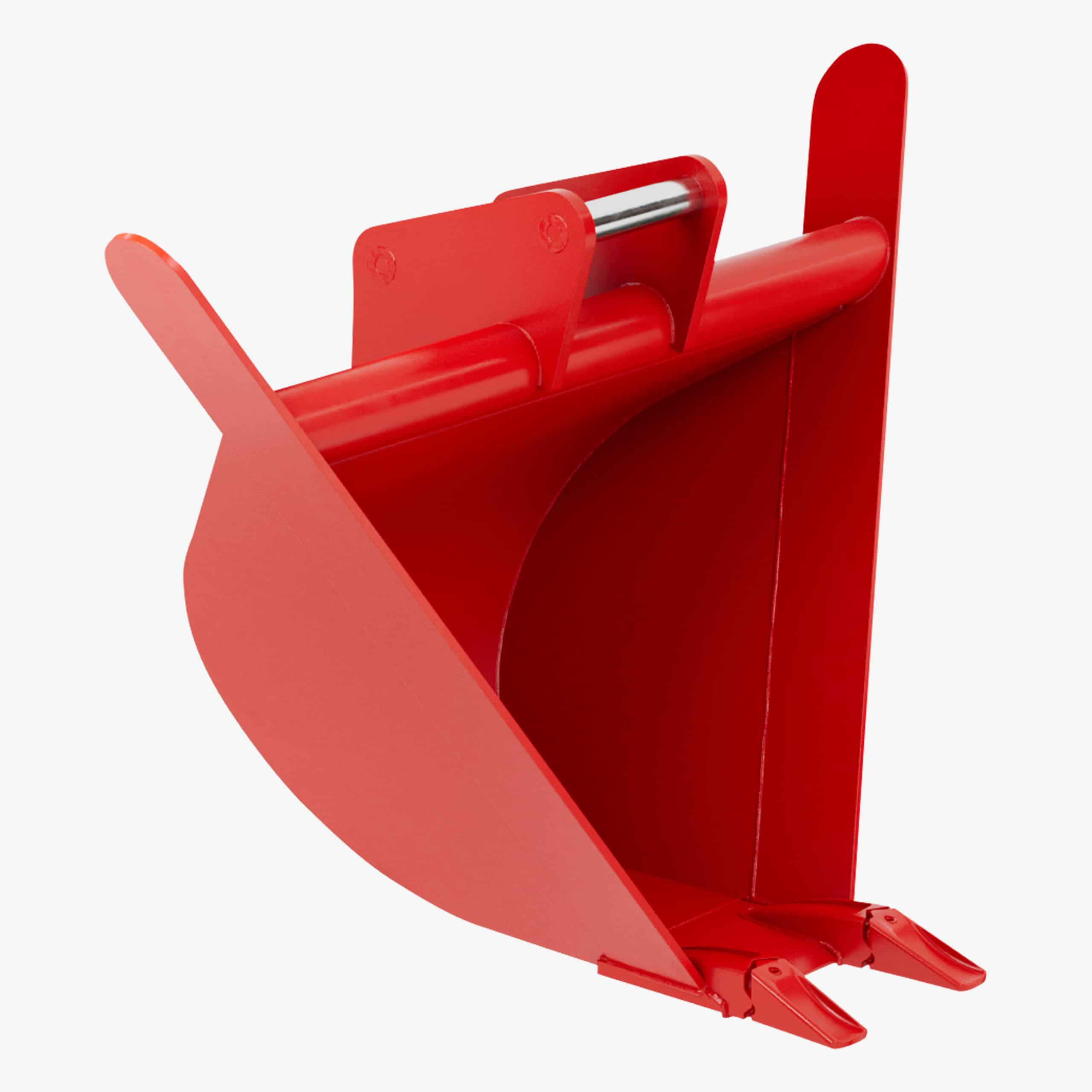
Forms a trapezoidal ditch or embankment profile in a single pass.
View attachment →
Rotating digging bucket for excavation and ground profiling.
View attachment →
Wide rotating bucket for cleaning ditches and slopes.
View attachment →
Screens material while digging and holds back coarse pieces.
View attachment →
Cleans ditches while screening material through the grid.
View attachment →Operating weight is the starting filter. The final choice also depends on the tool, the hydraulics, the mount and the actual task on site.
Hard ground needs a narrower, more robust bucket; loose material and finishing work use wider profiles.
A bigger bucket isn't always faster. It must match the excavator's power, stability and operating weight.
Digging, trapezoidal, grid and trench buckets solve different tasks and shouldn't be chosen by width alone.
The digging bucket is the basic choice for digging soil and loading. The width is chosen according to the excavator and the type of material.
It lets finer material fall through the grid while stones and larger pieces stay in the bucket.
When you need to form a ditch or embankment profile with defined side angles in a single pass.
Send us your machine model and a description of the job. We'll check the class, mount and hydraulic requirements before recommending anything.